

Professor Bryan Ward-Perkins

The Last Statues of Antiquity, Oxford University Press 2016 (with R.R.R. Smith, ed.)
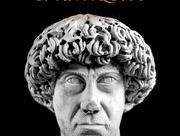
Spanning centuries and the vastness of the Roman Empire, The Last Statues of Antiquity is the first comprehensive survey of Roman honorific statues in the public realm in Late Antiquity. Drawn from a major research project and corresponding online database that collates all the available evidence for the 'statue habit' across the Empire from the late third century AD onwards, the volume examines where, how, and why statues were used, and why these important features of urban life began to decline in number before eventually disappearing around AD 600. Adopting a detailed comparative approach, the collection explores variation between different regions-including North Africa, Asia Minor, and the Near East-as well as individual cities, such as Aphrodisias, Athens, Constantinople, and Rome. A number of thematic chapters also consider the different kinds of honorand, from provincial governors and senators, to women and cultural heroes. Richly illustrated, the volume is the definitive resource for studying the phenomenon of late-antique statues. The collection also incorporates extensive references to the project's database, which is freely accessible online.
The Fall of Rome and the End of Civilization, Oxford University Press 2005
Vicious barbarian invasions during the fifth century resulted in the cataclysmic end of the world's most powerful civilization, and a 'dark age' for its conquered peoples. Or did it? The dominant view of this period today is that the 'fall of Rome' was a largely peaceful transition to Germanic rule, and the start of a positive cultural transformation.
Bryan Ward-Perkins encourages every reader to think again by reclaiming the drama and violence of the last days of the Roman world, and reminding us of the very real horrors of barbarian occupation. Attacking new sources with relish and making use of a range of contemporary archaeological evidence, he looks at both the wider explanations for the disintegration of the Roman world and also the consequences for the lives of everyday Romans, in a world of economic collapse, marauding barbarians, and the rise of a new religious orthodoxy. He also looks at how and why successive generations have understood this period differently, and why the story is still so significant today.